Nordic Walking Explained: What It Is and Why People Love It
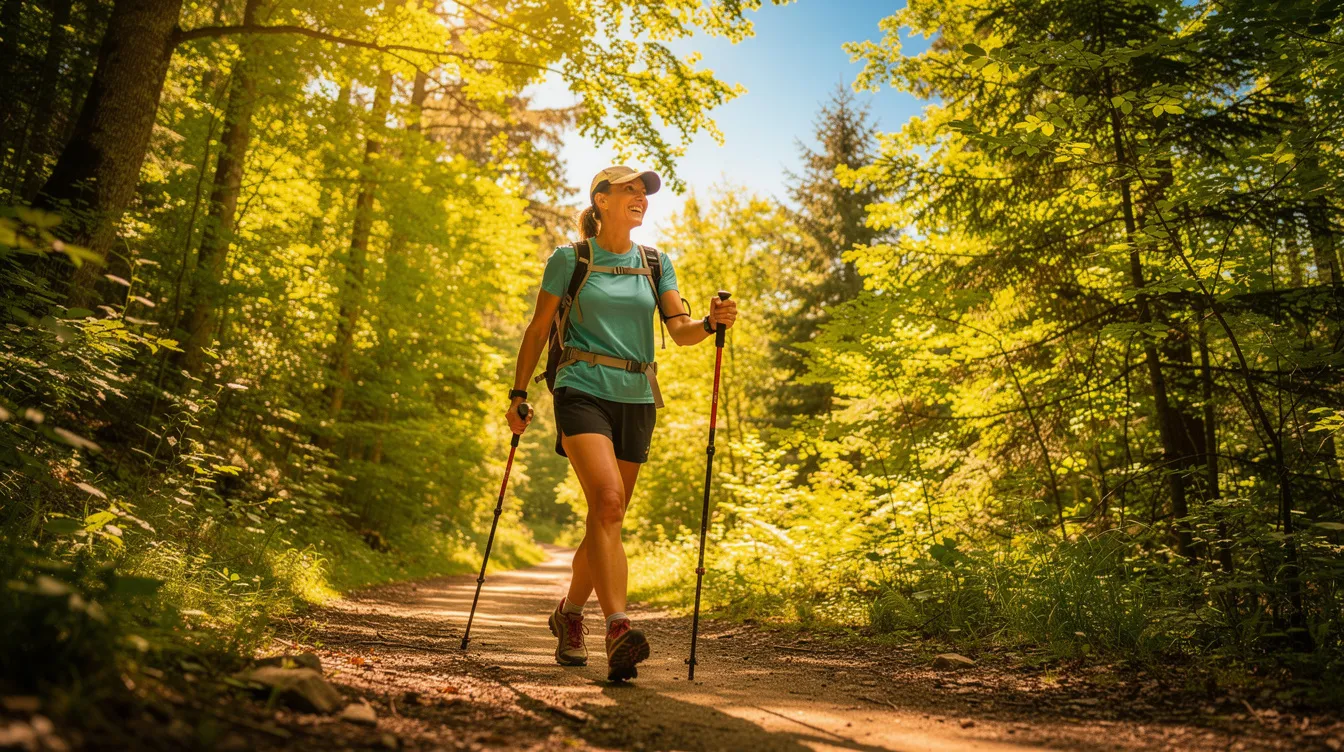
Picture your usual walk — but add two lightweight poles, a smooth push-and-glide arm motion, and suddenly your whole upper body is involved. That's nordic walking in a nutshell, and once people try it, many never go back to plain walking again. It's one of those rare activities that feels almost effortlessly fun while quietly working a lot more of your body than you'd expect.
What Exactly Is Nordic Walking?
Nordic walking is a full-body walking technique that uses specially designed poles — similar in feel to ski poles — to actively engage your arms, shoulders, chest and core as you walk. It originated in Finland, where cross-country skiers used it as a summer training method to stay fit off the snow. Over time, coaches and fitness enthusiasts realized that ordinary people of all fitness levels could benefit from the same technique, and the practice spread across Europe and beyond.
The key difference from regular walking is how you use the poles. You're not leaning on them like hiking staffs for balance. Instead, you plant each pole behind you and push back against the ground, driving yourself forward. That push activates your triceps, shoulders, chest and upper back with every single stride. The result is a natural, flowing movement that feels more like a whole-body rhythm than a workout.
How Nordic Walking Differs from Hiking or Trekking
It's easy to mix up nordic walking with hiking or trekking with poles, but they're genuinely different activities. Hikers typically use trekking poles in front of or beside their body for stability on uneven terrain — the poles act more as supports. Nordic walking poles are planted behind the body with a deliberate push-off motion, driving propulsion rather than just providing balance.
Nordic walking also happens on relatively flat or gently rolling terrain — paved paths, parks, beaches, grassy fields — whereas hiking is built around trails and elevation. You can practice nordic walking right in your neighborhood, which makes it much more accessible for everyday fitness than a proper hiking route.
The poles themselves are different too. Nordic walking poles are usually lighter, have a fixed wrist strap designed to let you release your grip at the top of each swing, and come in a specific length based on your height (roughly 68–70% of your height is a common starting guideline, though an instructor can help you fine-tune this).
Why Do So Many People Love It?
Ask anyone who nordic walks regularly why they love it, and you'll usually get one of a few consistent answers — or all of them at once.
- It feels easier than it looks. Because the poles help propel you forward, many people find they can walk farther and longer than they could without poles, often without feeling like they've overexerted themselves.
- More muscles, same time. Compared to regular walking, nordic walking brings the upper body into play, meaning you're doing more work per minute without having to run or dramatically increase your pace. If you've read our article on walking with weights, you'll recognize a similar appeal — finding smart ways to get more from a walk you were already going to take.
- It's social. Nordic walking clubs and group sessions have popped up in parks and recreation centers around the world. There's something about the shared rhythm of poles clicking along a path that brings people together.
- Gentle on the joints. The poles distribute some of your body weight away from your knees and hips, which many people find helpful — especially on longer walks. (That said, if you have joint concerns, always check with your doctor before starting any new routine.)
- It's for every age. You'll see everyone from teenagers to people in their eighties nordic walking. The technique scales beautifully to different fitness levels, and the pace is entirely yours to control.
Getting Started: What You Actually Need
The barrier to entry for nordic walking is refreshingly low. Here's what you genuinely need to begin:
- A pair of nordic walking poles. Don't substitute regular hiking poles if you can help it — the wrist strap design matters for the proper technique. Entry-level nordic walking poles are widely available and don't have to be expensive to start.
- Comfortable walking shoes. You don't need special footwear. Any supportive, well-fitting athletic shoe or walking shoe works fine.
- A short technique lesson. Nordic walking has a learning curve that's best shortened with a little guidance. Many sporting goods stores, fitness centers and parks offer free or low-cost introductory sessions. Even watching a few reputable tutorial videos online can make a real difference in your first few outings.
A common beginner mistake is gripping the poles too tightly or planting them in front like a hiking staff. Focus on letting your hand open slightly at the bottom of each swing — the wrist strap keeps the pole with you — and think of it as a push backward, not a stab forward.
How to Track Your Nordic Walking Progress
One of the best things about nordic walking is that it fits seamlessly into a step-based fitness routine. Your steps, distance and active time all accumulate just as they would on a regular walk — just with the bonus of upper-body engagement. Using a step counter app like StepsFit on your iPhone or Apple Watch lets you watch your daily step count and weekly trends grow over time, which is genuinely motivating when you're building a new habit like nordic walking.
A good approach for beginners is to start with two or three shorter nordic walking sessions per week and gradually increase the duration as the technique starts to feel natural. Tracking your steps each day helps you notice progress that might not always be obvious in the moment — especially in those first few weeks.
A Few Things Worth Knowing Before You Head Out
Nordic walking is suitable for most healthy adults, but a couple of practical notes are worth keeping in mind:
- If you have any upper body injuries, shoulder issues, or cardiovascular concerns, talk to your doctor before starting. The additional upper-body workload is mild for most people, but it's still an increase in overall effort.
- On hard surfaces like pavement, your poles will come with rubber tips (sometimes called "paws") that protect the asphalt and reduce noise. Keep these in good shape — they make a real difference in feel and grip.
- Stay hydrated. Because you're using more muscles than in a standard walk, you may find you work up a sweat more quickly than expected, especially on warmer days.
- Be patient with the technique. Most people feel a little awkward with the poles for the first few sessions. That's completely normal — within a few outings, the motion typically starts to click.
Is Nordic Walking Right for You?
If you enjoy walking and want to do a little more without dramatically changing your routine, nordic walking is one of the most natural upgrades available. It doesn't require a gym, a special location, a training partner or a significant investment. You can start in your own neighborhood, at your own pace, on your own schedule.
The people who love it most tend to describe the same thing: it just feels good. The rhythm is satisfying, the movement feels complete, and there's something quietly confidence-boosting about striding along with poles and knowing your whole body is involved in every step. Give it a fair try — a few sessions in, you might find yourself wondering why you didn't start sooner.